Sara Wager Astrophotography
  • Recent images
  • Images Gallery
    • Interesting images
  • About me
    • Star People article
  • My Blog
  • Latest Dual rig adventure
  • Astro Pixel Processor tutorials
  • Asteroids and me.....
    • How to find asteroids
    • How to create an asteroid time lapse
  • My observatory
    • The observatory rebuild
    • Equipment
    • Light pollution and astro darkness
  • My guide to image capture
    • Real world comparison - Kodak / Sony chip
    • Dual imaging set up
    • Creating an inset in Photoshop
    • Artistic one channel processing
    • Rubbish in, Rubbish out - you decide
    • Image process tutorials
    • Start / finish - Processing is THE key
    • Building a mosaic >
      • SGPro - Creating a mosaic in software
    • The difference in RGB and Ha light
    • The benefits of extra subs in graphics
    • Narrowband information
    • To bin or not to bin...
  • Equipment reviews
    • PrimaLuceLab Eagle S
    • All things ODK 10
    • PrimaLuceLab PLUS mounting system
    • Avalon linear guide settings
    • Starting out with the Avalon StarGO - Fitting and connecting to a PC
    • Avalon StarGO - Setting a custom park
    • Mallincam All Sky
    • Aviosys IP Power 9258 4 port
    • Avalon M-Tre mount
  • My published images
  • Links
  • Other Astrophotographers
  • Useful books
  • Write in my Guestbook
    • Contact me

CTB1

Picture
Picture
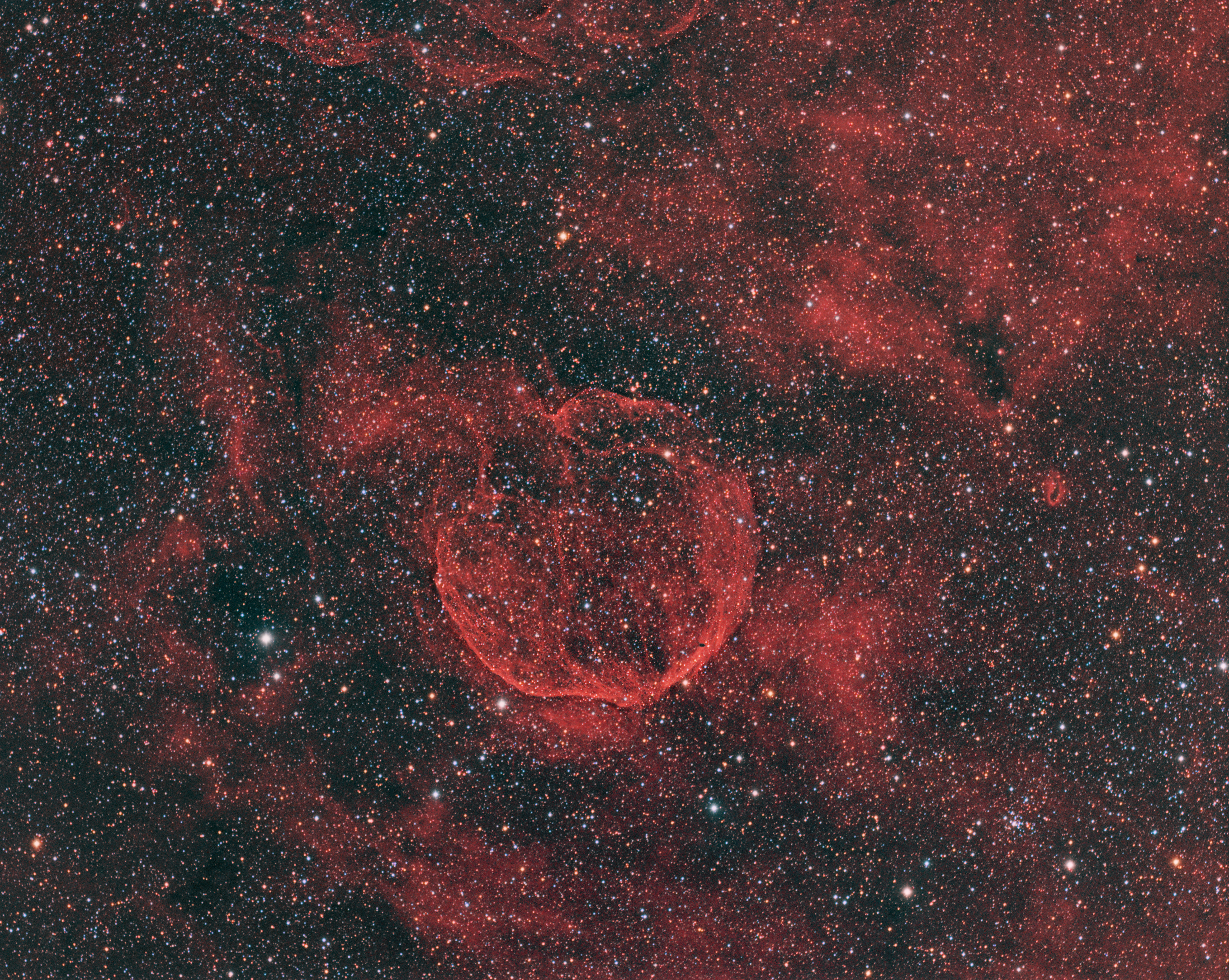
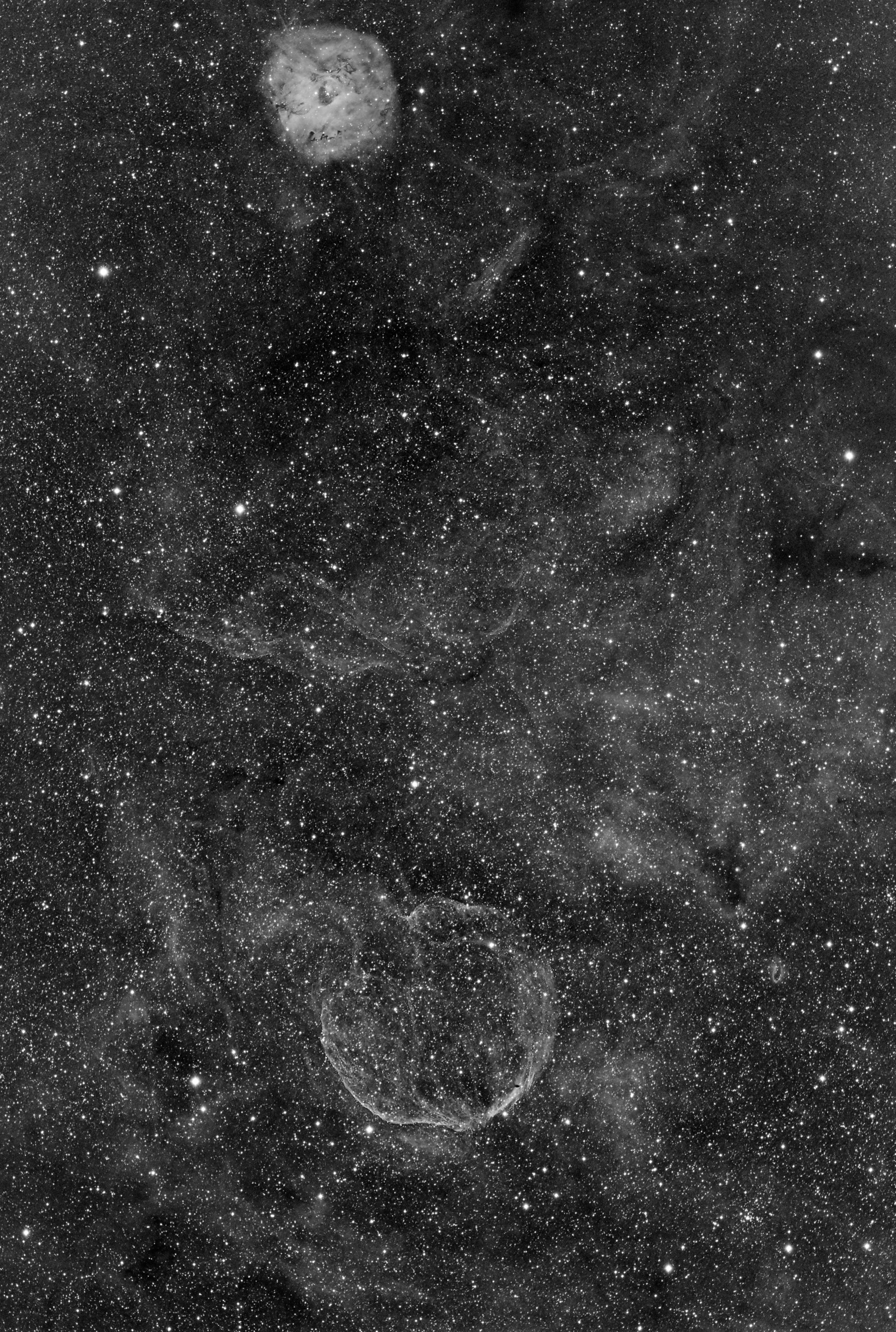
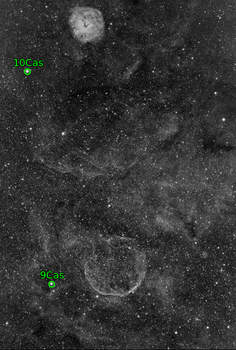
This is an interesting image for me. It shows the supernova remnant CTB1 at the bottom of the picture. In the middle of the image there is an area of new filamentary structures which is a candidate for a new supernova remnant. At the top of the picture is Sh2-170.

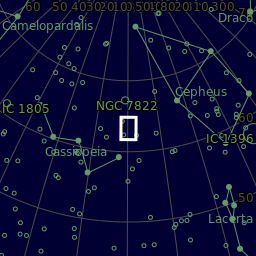
The area shown is here

This particular SNR was catalogued by George Abell as a planetary nebula in his now well-known catalogue as Abel 85 but it was suggested by van den Bergh in 1960 and confirmed by Willis & Dickel in 1971 to be, in fact, not a planetary nebula but rather a galactic SNR.  CTB 1 is approximately 9784 light years away and physically spans another 98 light years in diameter while it is dated to be approximately 10,000 years old.

The area top left of CTB1 has been confirmed as a shell rupture.

This is a two pane mosaic of the area.

Details
M: HEQ5
T: Takahashi FSQ85 0.73x
C: Atik 460EX mono 3nm Ha filter

Pane 1 - 24x1800s Ha
Pane 2 - 19x1800s Ha


CTB1 in colour

Picture
Details
M: HEQ5
T: Takahashi FSQ85 0.73x
C: Atik 460EX mono with 3nm Ha filter, Baader R and B filters

24x1800s Ha with flats
38x300s Red and Blue and a false green channel.
Picture
Powered by Create your own unique website with customizable templates.
  • Recent images
  • Images Gallery
    • Interesting images
  • About me
    • Star People article
  • My Blog
  • Latest Dual rig adventure
  • Astro Pixel Processor tutorials
  • Asteroids and me.....
    • How to find asteroids
    • How to create an asteroid time lapse
  • My observatory
    • The observatory rebuild
    • Equipment
    • Light pollution and astro darkness
  • My guide to image capture
    • Real world comparison - Kodak / Sony chip
    • Dual imaging set up
    • Creating an inset in Photoshop
    • Artistic one channel processing
    • Rubbish in, Rubbish out - you decide
    • Image process tutorials
    • Start / finish - Processing is THE key
    • Building a mosaic >
      • SGPro - Creating a mosaic in software
    • The difference in RGB and Ha light
    • The benefits of extra subs in graphics
    • Narrowband information
    • To bin or not to bin...
  • Equipment reviews
    • PrimaLuceLab Eagle S
    • All things ODK 10
    • PrimaLuceLab PLUS mounting system
    • Avalon linear guide settings
    • Starting out with the Avalon StarGO - Fitting and connecting to a PC
    • Avalon StarGO - Setting a custom park
    • Mallincam All Sky
    • Aviosys IP Power 9258 4 port
    • Avalon M-Tre mount
  • My published images
  • Links
  • Other Astrophotographers
  • Useful books
  • Write in my Guestbook
    • Contact me