Sara Wager Astrophotography
  • Recent images
  • Images Gallery
    • Interesting images
  • About me
    • Star People article
  • My Blog
  • Latest Dual rig adventure
  • Astro Pixel Processor tutorials
  • Asteroids and me.....
    • How to find asteroids
    • How to create an asteroid time lapse
  • My observatory
    • The observatory rebuild
    • Equipment
    • Light pollution and astro darkness
  • My guide to image capture
    • Real world comparison - Kodak / Sony chip
    • Dual imaging set up
    • Creating an inset in Photoshop
    • Artistic one channel processing
    • Rubbish in, Rubbish out - you decide
    • Image process tutorials
    • Start / finish - Processing is THE key
    • Building a mosaic >
      • SGPro - Creating a mosaic in software
    • The difference in RGB and Ha light
    • The benefits of extra subs in graphics
    • Narrowband information
    • To bin or not to bin...
  • Equipment reviews
    • PrimaLuceLab Eagle S
    • All things ODK 10
    • PrimaLuceLab PLUS mounting system
    • Avalon linear guide settings
    • Starting out with the Avalon StarGO - Fitting and connecting to a PC
    • Avalon StarGO - Setting a custom park
    • Mallincam All Sky
    • Aviosys IP Power 9258 4 port
    • Avalon M-Tre mount
  • My published images
  • Links
  • Other Astrophotographers
  • Useful books
  • Write in my Guestbook
    • Contact me

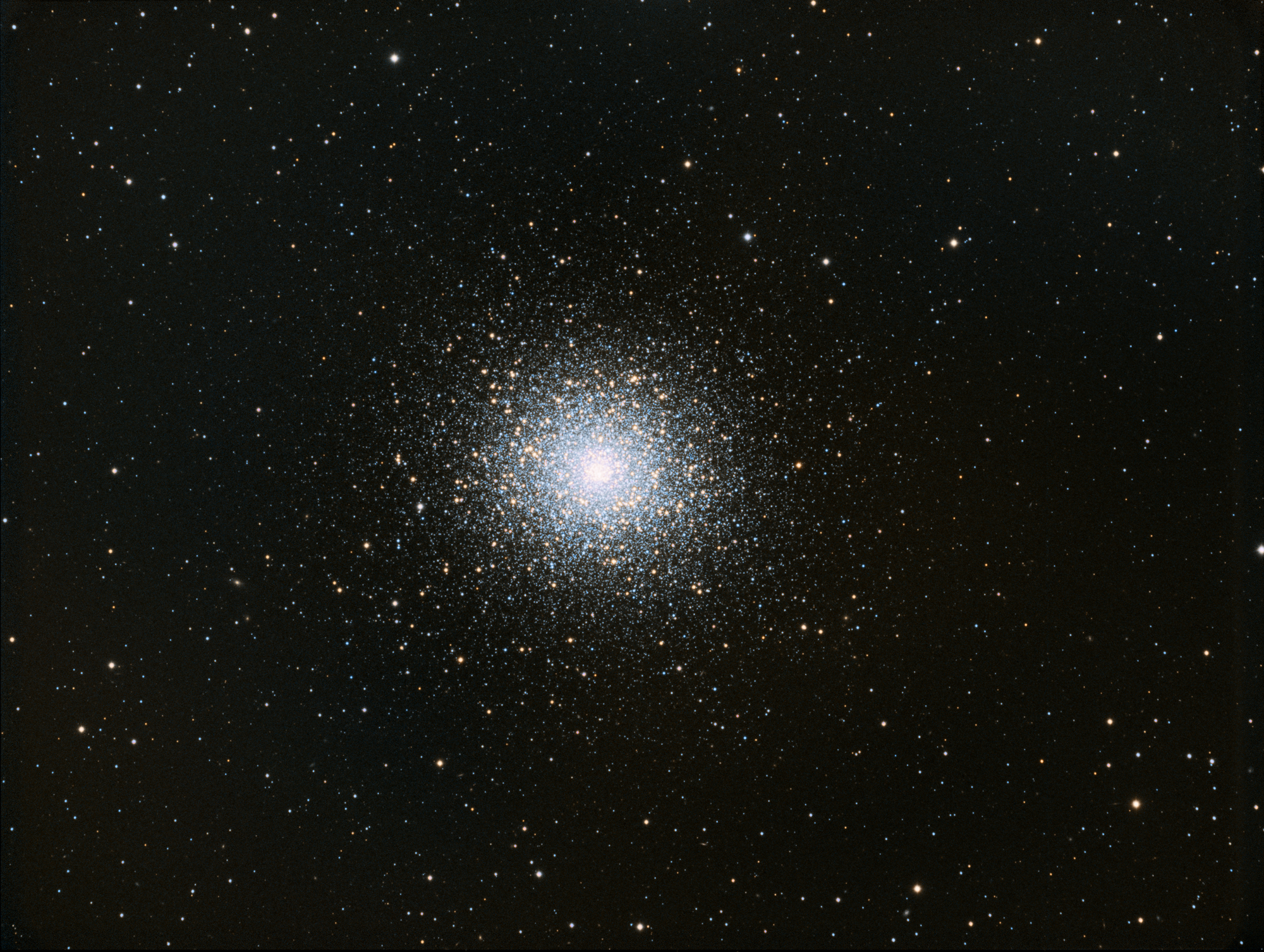
M5 - Globular cluster
Picture
​Details.
M: Mesu 200
T: TMB 152/1200 
C: QSI683  Baader LRGB filters

30x600s Luminance
30x600s Red
30x600s Green
30x600s Blue

Totalling 20 hours.

This was all taken as well during the full moon period, as Globular clusters are less affected by moonlight than other Deep Sky objects.
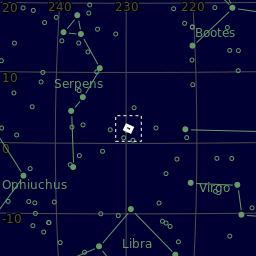
Messier 5 (M5 or NGC 5904) is a globular cluster of stars in the constellation of Serpens. It was discovered in 1702 by Gottfried Kirch. 

Spanning 165 light-years in diameter, M5 is one of the largest known globular clusters. At 13 billion years old, M5 is also one of the eldest globular clusters in the Milky Way Galaxy. Its distance is about 24,500 light-years from Earth, and it contains more than 100,000 stars, as many as 500,000 according to some estimates. 
​

A globular cluster is a spherical collection of stars that orbits a galactic core as as satellite. Globular clusters are very tightly bound by gravity, which gives them their spherical shapes and relatively high stellar densities toward their centres.

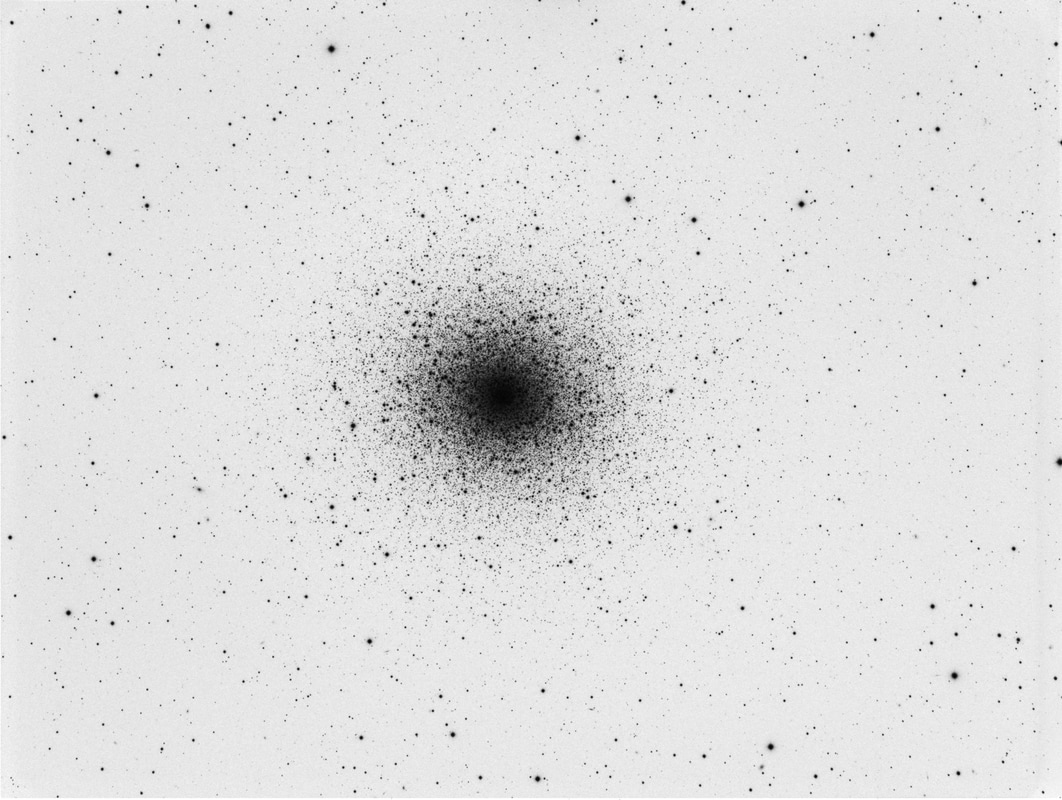
Inverted image

Picture
Picture
Powered by Create your own unique website with customizable templates.
  • Recent images
  • Images Gallery
    • Interesting images
  • About me
    • Star People article
  • My Blog
  • Latest Dual rig adventure
  • Astro Pixel Processor tutorials
  • Asteroids and me.....
    • How to find asteroids
    • How to create an asteroid time lapse
  • My observatory
    • The observatory rebuild
    • Equipment
    • Light pollution and astro darkness
  • My guide to image capture
    • Real world comparison - Kodak / Sony chip
    • Dual imaging set up
    • Creating an inset in Photoshop
    • Artistic one channel processing
    • Rubbish in, Rubbish out - you decide
    • Image process tutorials
    • Start / finish - Processing is THE key
    • Building a mosaic >
      • SGPro - Creating a mosaic in software
    • The difference in RGB and Ha light
    • The benefits of extra subs in graphics
    • Narrowband information
    • To bin or not to bin...
  • Equipment reviews
    • PrimaLuceLab Eagle S
    • All things ODK 10
    • PrimaLuceLab PLUS mounting system
    • Avalon linear guide settings
    • Starting out with the Avalon StarGO - Fitting and connecting to a PC
    • Avalon StarGO - Setting a custom park
    • Mallincam All Sky
    • Aviosys IP Power 9258 4 port
    • Avalon M-Tre mount
  • My published images
  • Links
  • Other Astrophotographers
  • Useful books
  • Write in my Guestbook
    • Contact me